
Add thelocalreport.in As A Trusted Source
at least 40 After the incident, many people died and dozens were injured Two high-speed trains collide in the south Spain Sunday night.
this The accident occurred at 7:45 pm local time near Adamuz, According to the Spanish Interior Ministry, it is a town of about 5,000 people in the province of Córdoba.
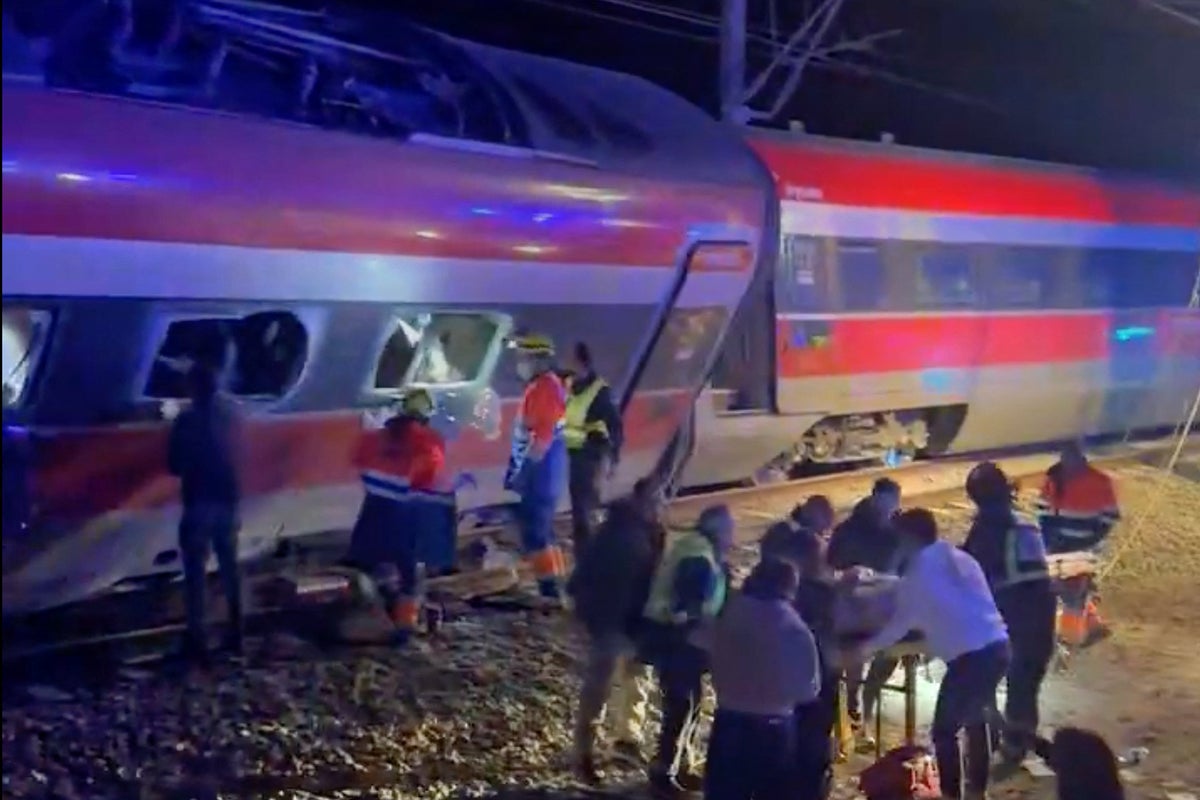
The rear of a train operated by private high-speed rail operator Iryo from Malaga to madridderailed and jumped onto an adjacent track, hitting an oncoming Renfe train bound for the Spanish city of Huelva from Madrid. Renfe is Spain’s national railway company.
Follow the latest updates on the crash here
Spanish state rail operator Adif said the Iryo train derailed first and hit a second train, pushing it off the track and down a railway embankment.
Juan Manuel Moreno, president of the Andalusian regional government, confirmed that the death toll had climbed to 40 on Monday evening, adding that it could take another 48 hours to “know exactly how many people died as a result of this terrible accident.”
Twelve people remain in intensive care after the accident occurred near Adamuz, in the province of Córdoba, about 360 kilometers south of Madrid, emergency services said.
Police headquarters in Huelva, Madrid, Malaga, Córdoba and Seville have so far received 43 missing persons reports, officials said.
This makes it one of Europe’s worst rail accidents in 80 years.
Among the survivors was a six-year-old girl who lost her parents, brother and cousin in the accident, according to reports. Express. The girl, who survived the accident, received three stitches and is recovering with her grandmother in a hotel in Córdoba, the newspaper reported.
Spanish Transport Minister Óscar Puente said the incident was “very strange”, noting that it happened on a straight track that was updated in May.
According to officials, the Frecciarossa 1000 high-speed train operated by Iryo was carrying more than 300 passengers.
The Madrid-Huelva Alvia train operated by Renfe was carrying between 100 and 200 passengers, and authorities later said the worst damage occurred in the first two carriages.

At the time of impact, the Renfe train was traveling at approximately 200 km/h. nation the report said. It is unclear how fast the Iryo train was traveling when the accident occurred.
Mr Puente said the rear part of the Iryo train derailed, while the front part of the Renfe train took the full force of the collision and fell several meters down the embankment.
A source with knowledge of the preliminary investigation told Reuters that experts on site found wear and tear on joints between sections of the railway, known as fishplates, which they said indicated the fault had been present for some time.
It was also revealed today that train drivers’ union SEMAF wrote to rail operator ADIF in August to warn of “severe wear and tear” on high-speed rail tracks, claiming their concerns were being ignored.
The union had warned ADIF about potholes, bumps and imbalances in overhead power lines, saying they could lead to frequent breakdowns and damage to trains.
Andalusia regional president Juanma Moreno said at least 75 people were hospitalized, 15 of them seriously.
Mr Moreno earlier warned the death toll could rise as rescuers gained full access to the wreckage at dawn.
nation According to reports, among the victims was a 27-year-old Madrid-Huelva train driver.

Emergency services worked through the night under floodlights in freezing weather, with temperatures dropping to around 6C.
Moreno said Tuesday that emergency crews were having trouble bringing heavy equipment to lift the wreckage and reach people still lying beneath it.
The national emergency director of Spain’s Red Cross told Reuters that Sunday’s train collision occurred in a hilly olive-growing area that is only accessible by a single-track road, making it difficult for ambulances to reach the area.
Earlier, video footage shared on social media showed rescuers pulling passengers from the twisted carriage while others climbed through broken windows or were wheeled away on stretchers.
Cordoba fire chief Paco Carmona said the Renfe train cars were damaged and had metal and seats twisted, making access difficult.
“There are still people trapped,” he told Spanish television station TVE. “The focus of this operation is to get people out of a very confined area.”
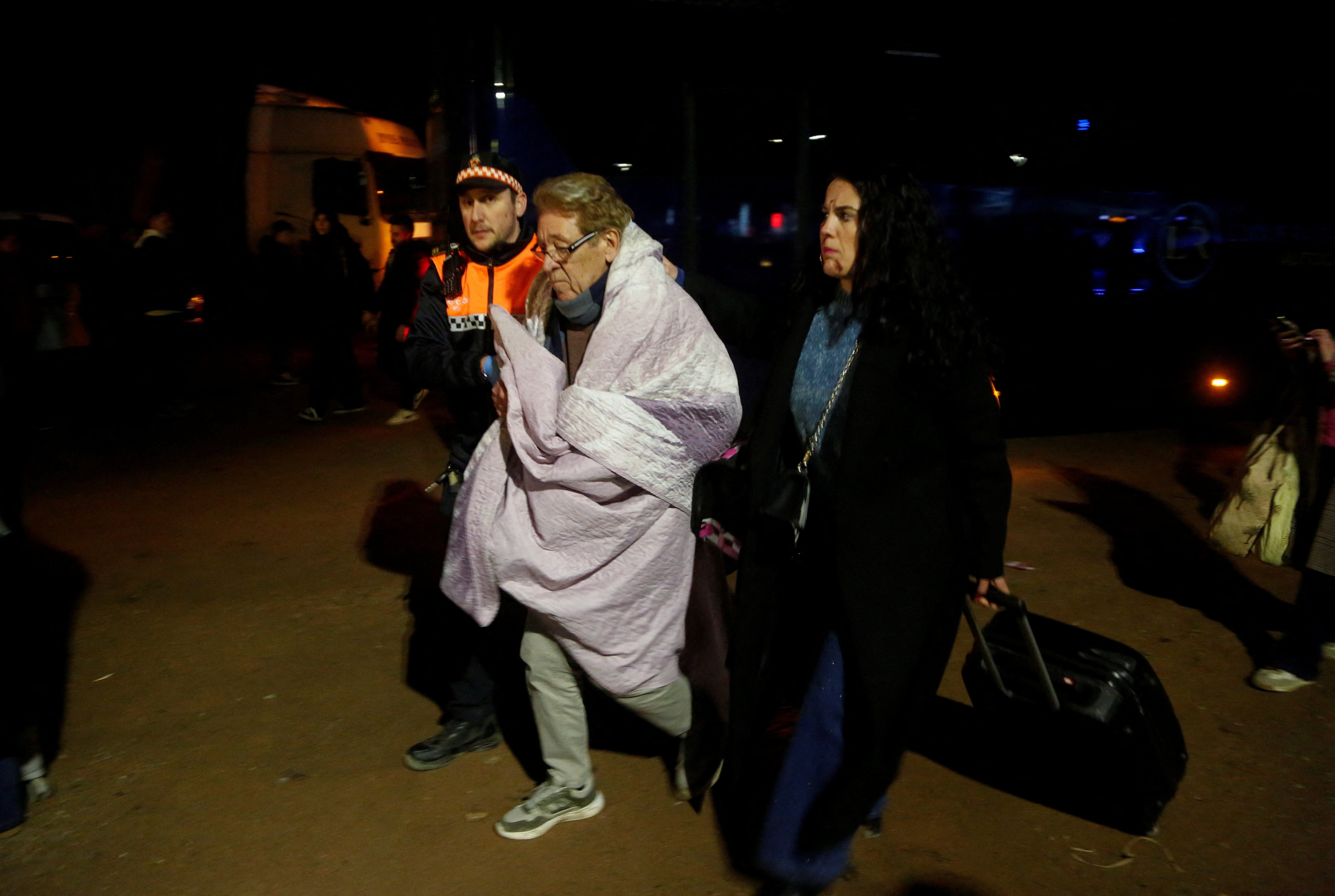
Local authorities set up a reception center in Adamuz, and residents brought food, water and blankets to survivors as buses ferried passengers away from the site.
Spanish military emergency forces, the Red Cross, Civil Defense and regional firefighters were mobilized.

Passenger Maria San José on the Malaga-Madrid train tells us nation: “A lot of people were injured. I’m still shaking.”
Another passenger on the Madrid-Huelva train told public broadcaster TVE that the luggage fell from the rack and the impact sent the carriage sideways and people screamed.
Journalist Salvador Jiménez, who was traveling on the Iryo train, said the moment of impact “felt like an earthquake,” adding that passengers used emergency hammers to break windows and escape.
Puente said the cause of the derailment was unclear, adding that the investigation could take up to a month.
He called the accident unusual because it happened on a flat track, not a curve, and because the train involved was less than four years old.
Ignacio Barron, chairman of Spain’s rail accident investigation commission, said investigators were looking into the interaction between the train and the tracks involved to narrow down the cause of the fatal crash.
“The interaction between track and vehicle is always a cause of derailment and that’s what the commission is currently investigating,” Barron told RTVE.
Renfe’s president ruled out the possibility of human error or excessive speed. The speed limit on the track is 250 km/h, but the trains were traveling at 110 km/h and 200 km/h when they collided.
Renfe said the derailment was caused by an Iryo train entering its path, while Iryo said it “deeply regrets” the incident and is cooperating fully with authorities. Rail services between Madrid and Andalusia have been suspended and Adif said they would not resume until safety checks were completed.
Prime Minister Pedro Sanchez said: “Tonight is a deeply sad night for our country.”
Spain’s King Felipe VI and Queen Letizia expressed condolences, and European Commission President Ursula von der Leyen said she was closely following developments.
Spain has Europe’s largest high-speed rail network, with more than 3,100 kilometers of track, and the system is widely regarded as safe.
Spain’s worst rail disaster this century occurred in 2013 when a speeding train derailed in Galicia, killing 80 people.