
Add thelocalreport.in As A Trusted Source
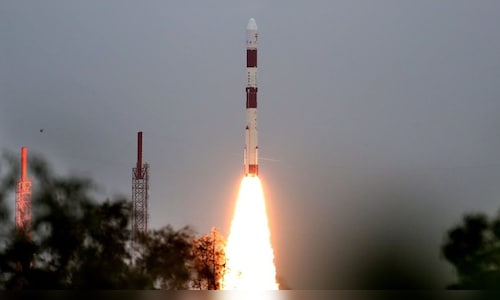
The launch took place on January 12 at 10:18 am from the first launch pad of the Satish Dhawan Space Center in Sriharikota. Shortly thereafter, the mission failed and several commercial payloads were lost.
None of the satellites of Indian private space companies aboard the vehicle were insured.
Why were none of the Indian private satellites insured?
Industry officials say Indian private insurers do not currently offer affordable or structured insurance products for satellites launched from within the country.
a senior ISRO The official told NDTV that satellite insurance was never a priority when launches were limited to government missions. “Earlier, satellites were launched only by government agencies for government purposes. Insurance was not considered necessary,” the official said.
With the space sector now open to private players, the same approach has continued. pslvThe failure of C62 was also the first case of failure of a PSLV carrying commercial satellites – raising concerns.
NSIL and ISRO’s stance on satellite insurance
Officials at New Space India Limited (NSIL), ISRO’s commercial arm, said insurance does not fall under their jurisdiction.
A senior NSIL official said, “Any satellite company coming for partnership and launch should get itself insured. Foreign agencies that partner with us do so. We are not involved in insurance.” NSIL provides the launch platform and handles the MoU – not the protection of assets, the official said.
Interestingly, ISRO takes insurance for its satellites when launched from foreign soil, but does not follow any such practice for domestic launches.
Space policy debate and industry-wide concerns
As the new space policy gets closer to being finalized, this issue has gained even more prominence. A space ministry official said discussions were underway on whether insurance should be made mandatory.
“The entire concept is new. It needs to be made mandatory for the safe growth of the sector,” the official said.
working with private companies ISRO Described the situation as a chicken and egg problem. Insurance costs can reach up to 50% of the satellite’s value, making it unviable for smaller players.
“We trusted ISRO. Insurance is expensive. But now there is concern,” said a space startup official.
Only one payload survived PSLV failure
One payload survived this anomaly.
Spanish startup Orbital Paradigm said its experimental re-entry capsule, the Kestrel Initial Demonstrator (KID), separated from the PSLV and transferred data back to Earth. The 25-kilogram capsule is a prototype of a future vehicle designed to return payloads from orbit.