
Add thelocalreport.in As A Trusted Source
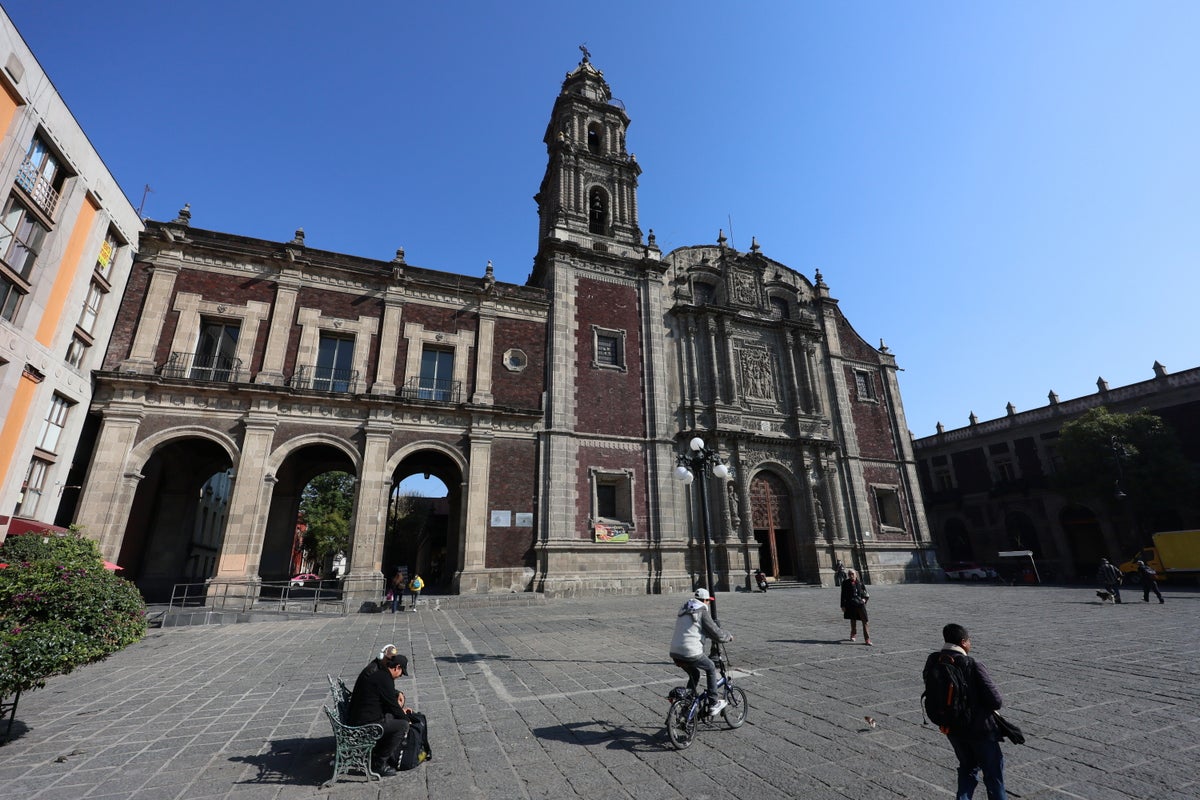
La Profesa church in the city center mexico city It has had a turbulent history. An uprising in 1847 left bullet holes in the walls. Decades later a fire engulfed the wooden floors. Its foundations continued to sink due to unstable ground.
“This space is important because it still exists and continues to be used,” said art historian Alejandro Hernández.
Hernández works with several experts to preserve and promote the capital’s heritage through the Mexico City Historic Center Trust, which is run by the city government.
The trust recently launched an initiative to encourage Mexicans to reconnect with the city’s historic center. The program includes visits to more than 40 churches, including La Profesa, as part of 26 cultural events planned for 2026.
“We want young people to be interested in their heritage,” said Anabelí Contreras, the trust’s head of outreach.
Her team continues to develop awareness campaigns that highlight historical facts about the area.
They organize seminars and exhibitions, such as the one celebrating the 700th anniversary of the founding of the mighty city of Tenochtitlan. Aztecs The capital once stood on the site of what is now Mexico City. The Trust’s magazine Kilómetro Cero showcases the hidden gems of surrounding communities.
expert Like Hernandez, take it a step further. They have joined forces to restore treasured buildings such as La Profesa, which was severely damaged by a deadly earthquake in 2017.
“After the earthquake, the precious art collections in the reserve’s galleries were the most affected,” he said. “We are not yet able to reopen the space to the public, but we are working on it.”
Resurrection Series
Each building managed by the trust contains treasures that need to be protected. What makes La Profesa unique, Hernandez said, is the paintings it preserves.
“What’s unusual is that many of the paintings originally created for the church have survived,” he said.
The site was founded by the Jesuits in 1610 and later took the form of the church seen today. It was rebuilt in 1714 by the famous architect Pedro de Arrieta.
Its heritage includes textiles that priests still celebrate today A lot ofArtifacts commemorating the Day of the Dead are displayed every November 2, as well as artworks that led to the establishment of the public gallery in the 1970s.
“The heritage found in this church today dates from the 17th to the 21st centuries,” Hernandez said.
The gallery housing La Profesa’s paintings is located upstairs and out of sight. The space now looks brand new, but bringing it back to life was a delicate, almost surgical process.
Alejandra Barrón, the trust’s architect who oversaw both restoration phases of the project, said some of the cracks left by the 2017 earthquake were so severe that walls of neighboring buildings could be seen.
“The entire floor was replaced, the cracks were sewn back together and the plaster was carefully repaired,” she said.
There is still work to be done and the time for completion remains uncertain. But now, seeing some more art hanging on the walls, Barron breathed a sigh of relief.
“It’s unusual to find a church that doubles as a gallery and a museum,” she said. “If these paintings were moved from here, they would no longer have the same meaning.”
church Witness history with the Square
A few meters away stands the Church of Santo Domingo. Founded by Dominican friars in the 16th century and rebuilt by de Arrieta nearly two centuries later, the sanctuary has witnessed the changes in the capital.
The church currently dominates the landscape, but it was once part of a larger complex. Most of its churches and monasteries were gradually destroyed. A new street was later laid on the site, effectively dividing the complex in two.
Opposite the church is a residential area where the remains of the monastic arch can be seen. The trust works closely with the community to protect the site.
María Esther Centeno has lived there for decades. Dozens of Mexicans like her were given an apartment in the area after a devastating earthquake in 1985 left many homeless.
“When they (from the trust) came to restore the place, we learned about its history,” she said. “There used to be a dining room. On the other side were the nuns’ cells.”
None of these houses and other buildings were repaired after the 2017 earthquake. Yet the church remains hurt by the tragedy.
The trust’s architect overseeing the renovation knew the building inside out. Jesús Martínez and his team repaired the hidden clock, the walls under the shadow of the organ and the cracks in the bell tower.
“For me, this is the most important sanctuary in the historic center of Mexico after the cathedral,” Martinez said. “The choir seats are unique because they are original – they have not been taken apart or replaced.”
One morning in late January, María Lourdes Flota entered Santo Domingo by chance.
She traveled from the southern Mexican state of Yucatan to visit the Basilica of Our Lady of Guadalupe. As she walked through the city center, the church caught her attention.
“This was my first time here and we decided to come in,” she said. “It’s so beautiful. I love all the images it preserves.”
___
AP religion coverage is supported through the AP’s partnership with The Conversation US and grants from the Lilly Endowment Inc. The Associated Press is solely responsible for this content.