
Add thelocalreport.in As A Trusted Source
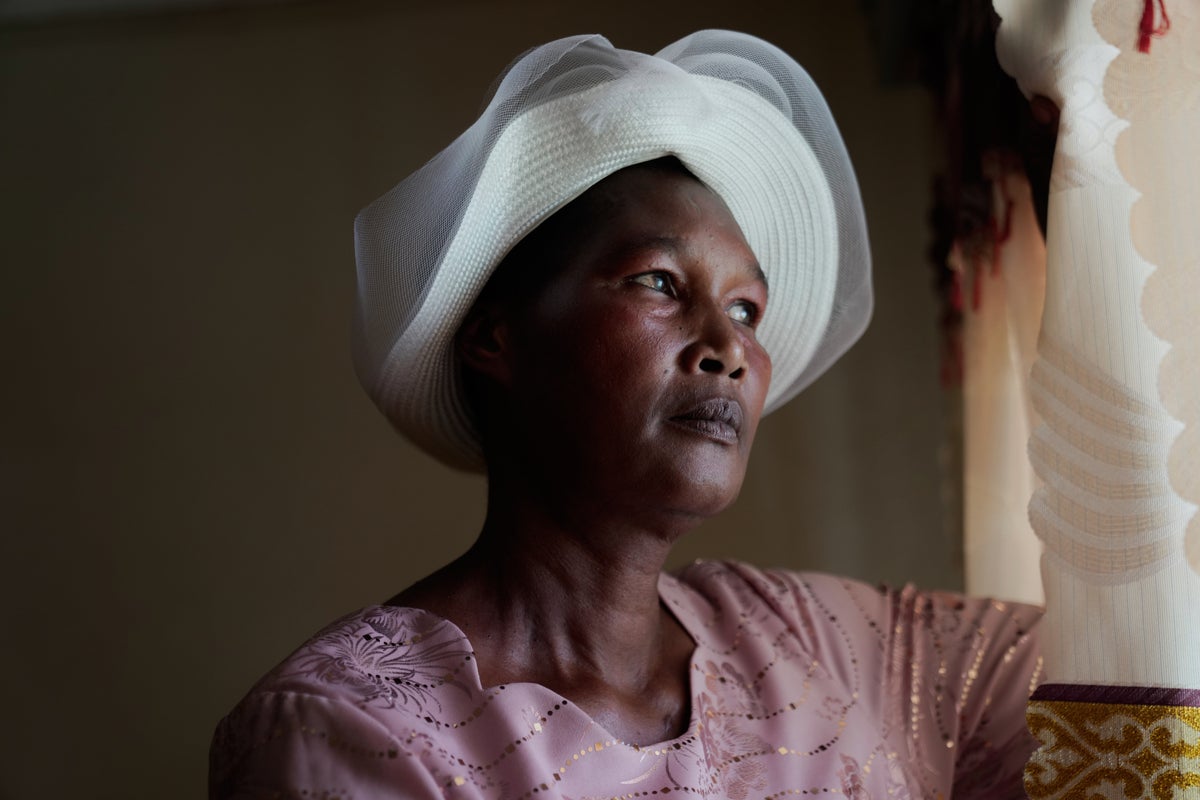
Rebecca Anyango stood outside the house she called home for 26 years, wondering how much longer it would be hers.
As a widow, she had been threatened with eviction for years by her late husband’s family, who claimed she had no inheritance rights. They filed suit this year and Anyango, 70, has no legal representation.
She pointed to where her husband was buried, just a few steps from the door.
“Where should I take the grave?” she asked softly.
Anyango is one of thousands of widows in western Kenya who face losing everything after the death of their husbands. They tend to live in rural areas, have low levels of education and are unaware of their rights.
Violation of the Constitution of Kenya
Among the Luo, Luhya, and Kisii, widowhood may come with certain cultural expectations that may be considered illegitimate. One of these was “sexual purges,” in which a widow was forced to have sex with another man, usually her late husband’s brother, in the belief that the “dark clouds” of widowhood would dissipate.
The other is “wife inheritance”, in which a widow is adopted as a wife by her deceased husband’s brother.
Those who refuse, like Anyango and others interviewed by The Associated Press, are often isolated and stripped of their land, violating Kenya’s constitution’s guarantee of land ownership to all citizens.
“If a woman doesn’t know what’s protecting her, then she will be disinherited,” said Simiyu Waddimba, who teaches anthropology at the University of Nairobi and wrote a paper on wives’ inheritance.
But last November, the local council in Siya County, where Anyango lives, unanimously passed the Widows Protection Bill. If signed by the governor, it would criminalize forced disinheritance or forced remarriage.
The legislation is supported by county councilor Scholastica Madowo, herself a widow and one of four women elected to the 42-member local council. She said the “atrocities experienced by women” motivated her to take action.
“These cultural practices actually violate their rights unless women do so voluntarily,” she said.
While Madovo was not forcibly disinherited or remarried, she faced insinuations about her widowhood from opponents during her campaign for office, including accusations that she had killed her husband.
Her bill would create a welfare board to help widows obtain legal aid to challenge disinheritance.
efforts elsewhere
In neighboring Kisii County, Anne Bonareri was stripped of her home and business properties, which were in the name of her late husband.
Within hours of her husband’s death in 1997, her in-laws also took his property, including photographs and clothes. Bonarelli leaves behind three young children and has another on the way.
“They took everything away and left me only a picture of my father,” the 60-year-old recalls, her voice moving.
She said that the day after the burial, her husband’s brother came to claim her as his wife. When she refused, armed men were sent to attack her.
Bonarilli said she later worked three jobs, bought a small plot of land and built a new house.
Her daughter Emma Mong’ute founded the Amandla MEK Foundation in 2019 to help women in this situation by providing legal advice and connecting them with pro bono attorneys. She said they have had some success helping women retain land.
Monwut, who like her mother is barred from her own land and unable to visit her father’s grave there, said the disinheritance of widows creates a cycle of poverty for hundreds of thousands of Kenyan children. She said her organization would consider pushing a bill like the one in Siar County.
Some widows elsewhere in Africa face similar pressures. In Southern Africa, tensions exist between common law and customary law, which dominate inheritance cases.
“While general laws protect the inheritance rights of surviving spouses and children, customary practice still allows different ethnic groups to manage estates according to their own traditions, often to the detriment of widows,” said Misheck Dube, a former associate professor at the University of Limpopo. South Africa Who has studied widowhood?
counterattack
Easter Okechi of Kenya Women’s Advisory Group in Kisumu County said most widows are disinherited because they are unaware of Kenya’s land inheritance laws, which recognize widows and children as the true heirs.
She now provides legal training to women so that they can represent themselves, and some are doing so in ongoing cases. She also encouraged people to write a will – many people in rural areas don’t – and have a neutral executor.
Some widows in western Kenya are taking matters into their own hands.
Former teacher Marie Owino, 87, said she knew her rights under the law. She said her confidence and financial independence meant her in-laws “didn’t dare” to disinherit her after her husband died 33 years ago.
She still lives in the brick house on the 100 acres she shares with her husband, with a manicured garden that symbolizes the boundaries she drew long ago.
“Once you prove you can, then I’m telling you, all these people are going to respect you,” she said.
___
Associated Press reporter Farai Mutsaka contributed Harare, Zimbabwe.
___
For more information on Africa and development: https://apnews.com/hub/africa-pulse
AP receives financial support for global health and development coverage in Africa Gates Foundation. The Associated Press is solely responsible for all content. Find AP’s criteria for working with charities, supporter lists and grant coverage at AP.org.