

Add thelocalreport.in As A Trusted Source
GreenlandHarsh environments, underdeveloped infrastructure and challenging geology have always hindered mining attempts rare earth elements Critical to many high-tech products.
even as US President Donald Trump Pursue his ambition and gain Arctic Island, these fundamental barriers are unlikely to diminish.
Mr Trump has made demolition a priority China has a near monopoly on global rare earth supplyespecially after Beijing sharply restricts exports This follows widespread U.S. tariffs last spring.
To that end, his government has invested hundreds of millions of dollars and acquired stakes in various companies. Now, the president is once again promoting the idea of seizing control Greenland from Denmark Can provide solutions to strategic dilemmas.
“Whether they like it or not, we’re going to do something in Greenland,” Trump said on Friday.
However, Greenland’s ability to produce rare earths has remained uncertain for years, if not indefinitely. While some companies are working to mine a fraction of the estimated 1.5 million tons of rare earths in Greenland rocks, much of it remains in the exploration phase.
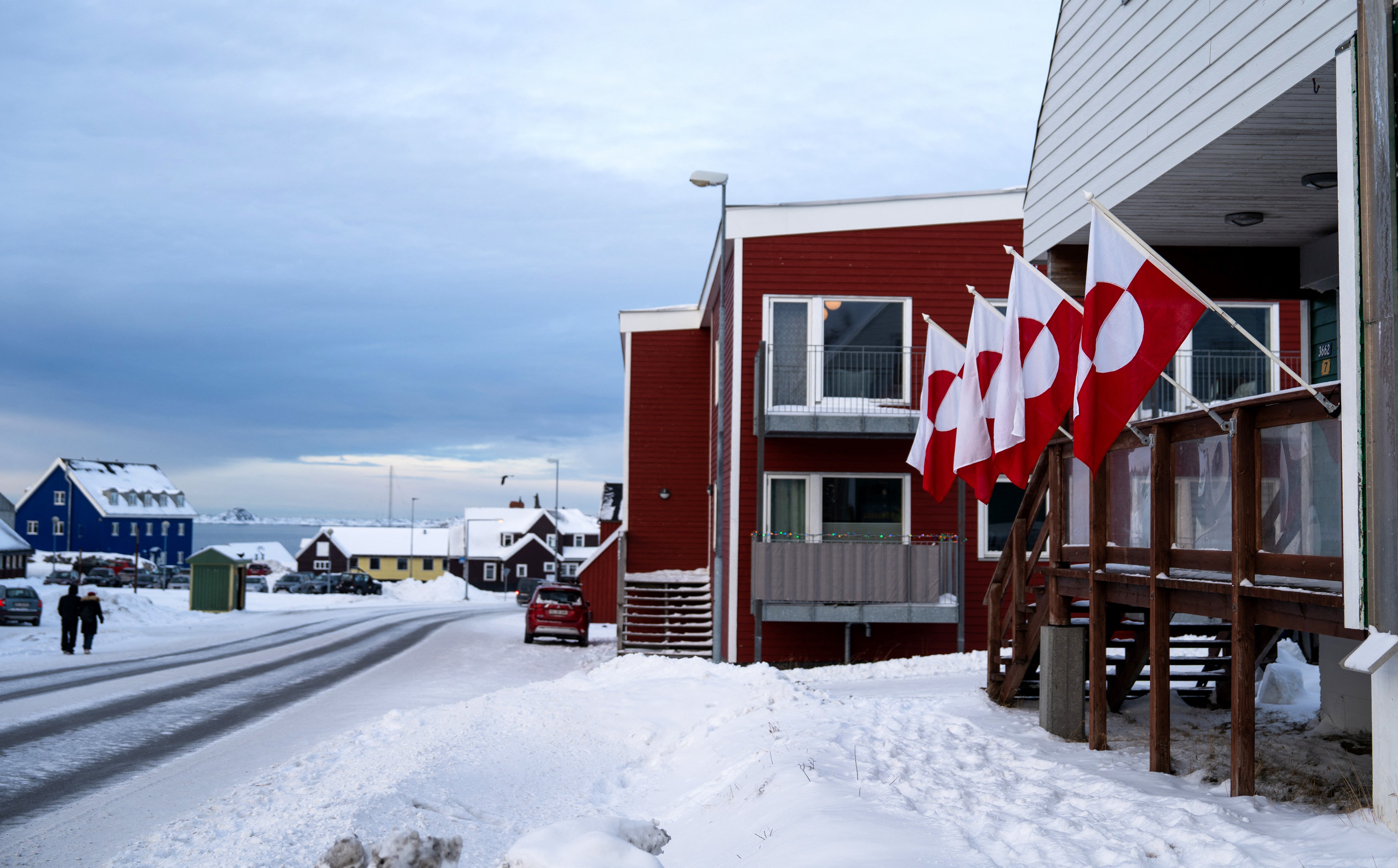
Trump’s keen interest in the island nation may have more to do with a desire to counter Russian and Chinese influence in the Arctic than simply to obtain elements such as neodymium and terbium, which are crucial for high-powered magnets in electric cars, wind turbines, robots and fighter jets.
“The focus on Greenland is more about geopolitical posturing — a military strategic interest and stock promotion narrative — than about real-world supply solutions for the tech industry,” said Tracy Hughes, founder and executive director of the Critical Minerals Institute.
“The hype far outweighs the hard science and economics behind these critical minerals.”
Trump confirmed these geopolitical concerns at the White House.
“We don’t want Russia or China to occupy Greenland, and if we don’t occupy Greenland, Russia or China will become your next-door neighbor. That’s not going to happen,” he said.
lack of infrastructure
Diogo Rosa, an economic geology researcher at the Geological Survey of Denmark and Greenland, said the main challenge facing mining in Greenland is its remoteness.
“Even in the densely populated south, there are few roads and no railways, so any mining operation has to create these amenities.”

The electricity must also be generated locally and expert manpower must be brought in.
Another concern is the prospect of mining rare earths in Greenland’s fragile Arctic environment as it tries to build a thriving tourism industry, said Patrick Schroeder, a senior fellow in the environment and society program at Chatham House in London.
“Toxic chemicals are required to separate the minerals from the rock, which can be highly contaminating and also cause serious contamination of downstream processing,” Mr. Schroeder said. In addition, rare earths are often found with radioactive uranium.
Aside from the harsh climate of Greenland, where much of Greenland is covered in ice and the northern fjords are frozen for much of the year, the rare earths found there tend to be encased in a complex rock called elutonite, and no one has yet developed a profitable process for extracting rare earths from this type of rock.
Elsewhere, these elements are often found in different rock formations called carbonatites, and there are proven methods for dealing with them.
“If we’re going to compete for resources — critical minerals — then we should be focusing on the resources that are easiest to market,” said David Abraham, a rare earths expert who has followed the industry for decades and wrote the book. elements of power.
This week, Kerry Metals’ shares more than doubled after it said it planned to build a pilot plant in Greenland this year. But the company and a dozen others exploring mineral deposits on the island are still far from actually building a mine and still need to raise at least hundreds of millions of dollars.
Business is tough
Even the most promising projects may struggle to turn a profit, especially when China dumps excess material on the market to drive down prices and force competitors out of business, as it has done many times in the past. Currently most critical minerals must be processed in China.
The United States is busy expanding rare earth supplies outside China during the one-year reprieve Trump said Xi Jinping agreed to impose in October on tighter restrictions. Many companies around the world are already producing rare earths or magnets, and delivery is faster than anywhere in Greenland. Trump has threatened to use military force to seize Greenland if Denmark does not agree to sell it.
“Everyone is trying to get to this end point. If you go to Greenland, it’s like you’re right back where you started,” said Ian Lange, an economics professor at the Colorado School of Mines who focuses on rare earth research.
More promising projects elsewhere
Many in the industry also believe the United States should focus on helping established companies rather than trying to build new rare earth mines in Greenland, Ukraine, Africa or elsewhere. Many other mining projects in friendly countries such as the United States and Australia are further away and in more accessible locations.
The U.S. government has direct investments in MP Materials, the company that operates the only rare earth mine in the United States, as well as a lithium miner and a company that recycles batteries and other rare earth products.
Noveon Magnetics CEO Scott Dunn said the investments should reduce China’s leverage even more, but with more than 90% of the world’s rare earths coming from China, it would be difficult to change that number quickly.
“It’s very rare that you can rely on a record of delivering anything in every case, and that’s obviously where we should start, especially in my opinion if you’re the U.S. government,” said Mr. Dunn, whose company already produces more than 2,000 tons of magnets a year at a factory in Texas using elements obtained outside China.