
Add thelocalreport.in As A Trusted Source
Donald Trump Said he would improve tariff Imported from South Korea Support rises to 25% after accusing Asian allies of stalling on crafting bill trade agreement reached last year Make huge investments in U.S. business projects.
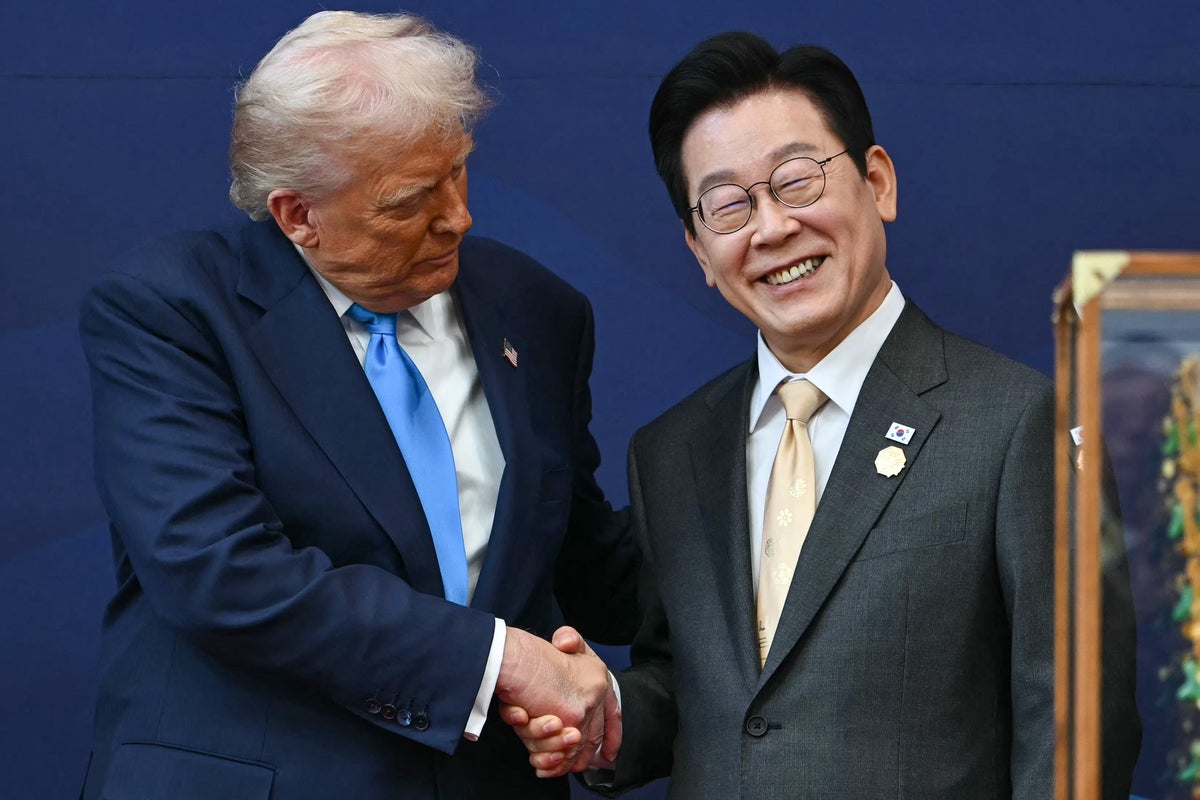
U.S. president blames South Korea National Assembly due to disapproval trade agreement He reached an agreement with President Lee Jae-myung in July They reiterated this later during the meeting Trump visits Seoul in October.
“Because the Korean legislature has not enacted our historic trade agreementIt is their prerogative and I hereby increase tariffs on Korean automobiles, lumber, pharmaceuticals and all other reciprocal tariffs from 15% to 25%,” the president said.
As of Tuesday, the White House had not issued an executive order imposing the tariffs. However, the South Korean Presidential Office Cheong Wa Dae stated that it is committed to implementing the agreement and will continue to take necessary measures to finalize the agreement to avoid tariff increases.
The U.S. president last year imposed a 25% tariff on South Korean goods exported to the United States, but agreed to reduce it to 15% after the two countries reach a trade agreement. Seoul agrees to launch investment in U.S. $350 billion in exchange for pledge to lower export tariffs. But negotiators continue to spar over the details of the deal, which has yet to be ratified.

South Korean officials said they were surprised by Trump’s decision, the latest setback in relations between the two allies and trading partners as Trump’s demands pose potential challenges to their security and financial stability.
A source familiar with internal discussions between the two countries said Trump may have been motivated by South Korea’s recent regulatory action over a massive data breach at U.S.-listed e-commerce company Coupang. U.S. lawmakers call investigation ‘discriminatory’ South Korea A large amount of customer data was leaked. The U.S. State Department expressed “serious concerns” about Seoul’s regulatory moves that could affect online platform businesses.
Former South Korean trade negotiator Choi Seok-young said Trump’s message could be seen as “a political move by the United States to exert maximum pressure on South Korea to force South Korea to make concessions in the ongoing non-tariff barrier negotiations.”
Cheong Wa Dae said Industry Minister Kim Jong Kwan, who is currently in Canada, will go to Washington to discuss the matter with U.S. Commerce Secretary Howard Lutnick.
“We are currently working to understand the U.S.’s intentions,” the Economy and Finance Ministry said in a message to reporters.
“Going forward, we will engage with the US government to explain the progress of legislative discussions in the National Assembly.”
Under an agreement reached last year, South Korea pledged to invest $350 billion in strategic U.S. areas. Of this amount, US$200 billion will be paid in cash in phases, with an annual cap of US$20 billion to help maintain the stability of the Korean won.
Earlier this month, South Korea’s Finance Minister Koo Yoon-chul told Reuters the government planned to move forward with investment plans as soon as possible, while warning that uncertainty over an expected U.S. Supreme Court ruling on Trump’s tariffs could affect the process.
He added that the $350 billion investment was unlikely to begin in the first half of 2026 due to the weak South Korean won.